Understanding the Orb: How the Earth Moves

If you're working on a science project about the Earth, it's essential to understand how it moves through space and why these movements matter. The Earth undergoes three primary movements: rotation, revolution, and precession. These movements influence our daily lives by determining day length, changing the seasons, and playing a crucial role in navigation and astronomy.
What are the Earth's main movements?
The Earth primarily moves in three ways: rotation, revolution, and precession. Rotation is the Earth's spin around its own axis, which takes about 24 hours to complete, resulting in day and night. Revolution refers to the Earth's orbit around the Sun, which takes approximately 365.25 days and is responsible for the changing seasons. Precession is a slower movement where the Earth's rotation axis wobbles over a cycle of about 26,000 years, affecting the position of the North Star and the timing of the seasons relative to our calendar. Each of these movements plays a crucial role in how we perceive time and our environment.
How does Earth's rotation affect us?
Earth's rotation directly impacts our experience of time through the cycle of day and night. As the Earth spins, different areas are exposed to sunlight, creating daytime, while regions turned away from the Sun experience night. This rotation establishes time zones; for example, when it’s noon in New York City, it’s 9 a.m. in Los Angeles. Understanding time zones helps us coordinate activities across different regions. Misunderstanding rotation can lead to confusion about global time differences, particularly during events like Daylight Saving Time.

What causes the seasons?
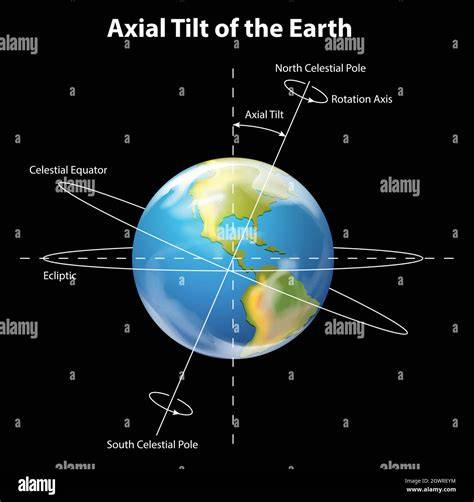
The changing seasons result from Earth's axial tilt as it revolves around the Sun. The Earth is tilted at an angle of about 23.5 degrees, meaning that different areas receive varying amounts of sunlight throughout the year. For instance, when the Northern Hemisphere is tilted toward the Sun, it experiences summer, while the Southern Hemisphere, tilted away, undergoes winter. This axial tilt also affects the length of daylight; during summer, days are longer, while in winter, they are shorter. This understanding clarifies why seasons vary by location and how climate is influenced.
Why is Earth's movement important for navigation?
Both ancient and modern navigation rely heavily on understanding Earth's movements. Sailors and explorers used the stars, positioned relative to Earth’s rotation, to navigate the oceans. Today, GPS technology employs principles linked to Earth's rotation and revolution for accurate location pinpointing. GPS satellites orbit the Earth and must account for its movements to provide precise positioning data. A misunderstanding of these movements could lead to significant navigational errors, highlighting their importance for travel and exploration.
What are some interesting facts about Earth's movements?
There are many fascinating aspects of Earth's movements that affect our planet. For example, the rotation of the Earth influences ocean currents, which in turn affect climate patterns. The Coriolis effect, resulting from Earth’s rotation, causes moving air and water to turn in specific directions, impacting weather systems. Additionally, the precession of the Earth can affect long-term climate patterns, potentially linking it to ice ages. These facts demonstrate how interconnected Earth's movements are with broader environmental systems.
Conclusion
To start your project, focus on understanding the basic movements of the Earth: rotation, revolution, and precession. Don't worry about memorizing all the numbers or intricate details right away; instead, grasp the concepts and their real-world implications. A successful project will explain how these movements affect daily life, including the change in seasons and how we navigate the globe.
Frequently Asked Questions
What is the difference between rotation and revolution?
Rotation is when the Earth spins on its own axis, leading to day and night, while revolution is the Earth's orbit around the Sun, which takes about a year and causes the seasons.
How does Earth's tilt affect the climate?
Earth's axial tilt causes different parts of the planet to receive varying amounts of sunlight throughout the year, leading to seasonal changes and influencing climate patterns.
Why do we have time zones?
Time zones are established based on Earth's rotation, allowing different regions to have local times that reflect the position of the Sun in their sky.
What is precession and why is it important?
Precession is the gradual wobble of Earth's rotation axis over thousands of years. It affects the alignment of the stars and the timing of the seasons, which can have long-term climate implications.
Can Earth's movements affect ocean currents?
Yes, Earth's rotation influences ocean currents through the Coriolis effect, which impacts climate and weather patterns around the globe.