Understanding the Constitution of the Dominican Republic
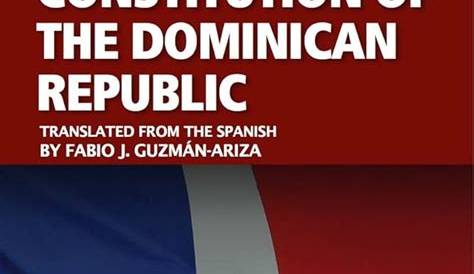
The Constitution of the Dominican Republic is the supreme law that shapes the country's governance and protects citizens' rights. It serves as the foundation for the legal and political system, influencing how laws are made and enforced. Understanding its historical context and key principles is crucial for grasping the dynamics of Dominican governance and for your upcoming exam.
What is the Constitution of the Dominican Republic and why does it matter?
The Constitution of the Dominican Republic serves as the supreme law of the land, providing the framework for governance and the protection of citizens' rights. First adopted in 1844, shortly after the nation gained independence from Haiti, it has undergone multiple amendments and revisions that reflect changing political climates and social needs. It outlines the structure of government by dividing power among the executive, legislative, and judicial branches while enshrining the principles of democracy, ensuring government accountability to the people. A well-functioning Constitution is essential for maintaining order, protecting liberties, and providing a mechanism for conflict resolution within society. Without it, the rule of law could be compromised, leading to potential abuses of power and societal instability.
What are the main rights and freedoms guaranteed by the Constitution?
The Constitution guarantees a wide array of rights and freedoms fundamental to a democratic society. These include civil liberties such as freedom of speech, freedom of assembly, and freedom of religion. It also protects social rights, ensuring that all citizens have access to essential services like education and healthcare. For example, Article 8 establishes the right to life, personal integrity, and freedom, while Article 61 emphasizes the right to education. However, the practical application of these rights can be inconsistent due to issues like enforcement and access to justice, which may limit their effectiveness. Understanding these challenges is vital for your exam, as they highlight the complexities involved in upholding constitutional rights.
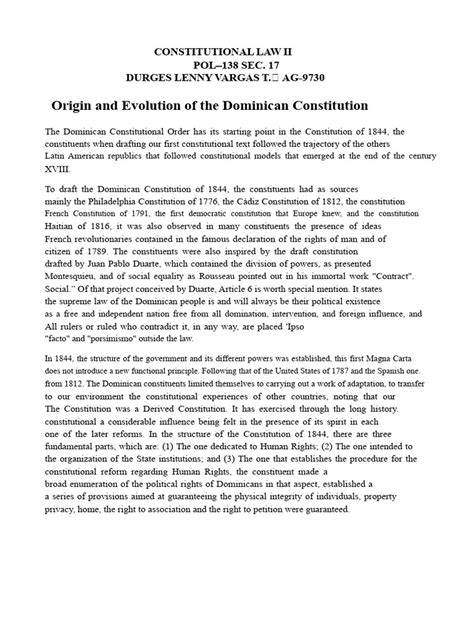
How has the Constitution evolved since its inception?
Since its first promulgation in 1844, the Constitution has evolved through various amendments, reflecting the dynamic political landscape of the Dominican Republic. Significant changes occurred in 1966 when the Constitution was reformed to strengthen democratic processes following a period of dictatorship. The 2010 amendment introduced provisions related to the protection of human rights, emphasizing gender equality and environmental rights. Each amendment typically arises from social movements, political pressures, or demands for reform, showcasing how the Constitution adapts to society's needs. However, the amendment process can be contentious, often leading to significant political debate. It is important to pay attention to these historical amendments, as they reveal the shifting priorities in Dominican society and governance.
What is the relationship between the Constitution and other laws in the Dominican Republic?
The Constitution stands at the top of the legal hierarchy in the Dominican Republic, meaning all other laws must align with its principles. This relationship is crucial, as any law contradicting the Constitution can be challenged in court and potentially declared unconstitutional. The Constitution also provides a framework for ordinary laws, guiding their creation and enforcement. For instance, laws regarding civil rights must be consistent with the rights outlined in the Constitution. However, practical challenges can arise, such as delays in judicial processes or political influence over legal interpretations, which can affect the realization of constitutional rights. Understanding how the Constitution interacts with other laws will be vital for your exam, especially when discussing the effectiveness of legal protections.
What should I know for my exam on the Dominican Constitution?
For your exam, focus on the key principles enshrined in the Constitution, including the separation of powers, the protection of fundamental rights, and the amendment process. Familiarize yourself with significant historical amendments and the context in which they occurred, as these often feature in exam questions. Understanding the practical implications of the Constitution's provisions, especially how they relate to current events or recent legal cases in the Dominican Republic, will also be beneficial. Lastly, pay attention to the relationship between the Constitution and other laws, as this understanding will help you analyze legal issues effectively.
Conclusion
Review the specific articles of the Constitution that outline rights and governance structures, and focus on understanding the historical context and major amendments, as these shape current legal practices. Concentrating on the broader principles while not getting lost in minor details will help you retain essential information. A solid grasp of these elements will lead to a more nuanced understanding of Dominican governance and its challenges.
Frequently Asked Questions
What is the significance of the Constitution of the Dominican Republic?
The Constitution is significant because it establishes the fundamental laws of the nation, defines the structure of government, and guarantees the rights of citizens. It acts as a safeguard against abuse of power and ensures that governance remains accountable to the people.
How many times has the Constitution of the Dominican Republic been amended?
The Constitution has been amended multiple times since its original adoption in 1844. Key amendments occurred in 1966 and 2010, each reflecting significant political changes and societal demands for reform.
What rights are explicitly protected by the Constitution?
The Constitution explicitly protects a range of rights, including freedoms of speech, assembly, and religion, as well as social rights like education and healthcare. These rights are essential for maintaining a democratic society.
How does the Constitution interact with international law?
The Constitution recognizes international treaties and agreements as part of the legal framework, meaning that international law can influence domestic law. However, the application can depend on the political context and judicial interpretations.
What challenges exist in enforcing the rights guaranteed by the Constitution?
Challenges in enforcing constitutional rights include political influence over the judiciary, delays in legal processes, and social inequalities that affect access to justice. These factors can hinder the realization of the rights outlined in the Constitution.