Understanding Trench Warfare: Its History and Impact
Trench warfare is a combat strategy where opposing troops fight from deep trenches dug into the ground. This tactic gained prominence during World War I, especially on the Western Front, leading to a prolonged stalemate and devastating casualties.
What is trench warfare?
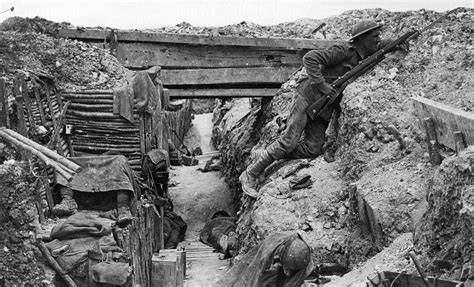
Trench warfare involves military operations where soldiers engage in combat from long, narrow ditches or trenches. These trenches provided some protection from enemy fire and were used to hold positions while launching attacks or defending against assaults. The origins of trench warfare can be traced back to earlier conflicts, but it became a defining characteristic of World War I, particularly between 1914 and 1918. This static nature of trench warfare resulted in a brutal and drawn-out conflict, marked by a lack of mobility and horrific living conditions for soldiers. For example, soldiers lived in mud-filled trenches that were often infested with vermin and disease.
Historical examples of trench warfare
One of the most notable examples of trench warfare is the Battle of the Somme, which took place in 1916. This battle highlighted the gruesome reality of trench combat, where soldiers faced machine gun fire, artillery bombardments, and the constant threat of enemy attacks. Another significant engagement was the Battle of Verdun, also in 1916, which became a symbol of French national determination. Conditions in these trenches were dire, with soldiers coping with mud, vermin, and disease, contributing to high rates of psychological trauma and physical illness.
The impact of trench warfare on soldiers
The conditions in the trenches had severe physical and psychological effects on soldiers. Physically, they suffered from exhaustion, infections, and injuries due to unsanitary conditions and inadequate medical care. Psychologically, many soldiers experienced what we now recognize as post-traumatic stress disorder (PTSD). The constant threat of death, combined with the monotony and fear of life in the trenches, led to mental health issues, including a phenomenon known as "trench fever." Soldiers often felt isolated, trapped in a brutal cycle of combat.
Military strategies influenced by trench warfare
Trench warfare significantly altered military strategies. Commanders had to adapt to the realities of static frontlines, leading to the development of new tactics, such as the use of tanks and coordinated artillery barrages. The lessons learned from trench warfare influenced military thinking in subsequent conflicts, including World War II, where mobility and combined arms operations became essential. Modern warfare continues to reflect some of these strategic evolutions, emphasizing the importance of technology and rapid maneuvering over static defenses.
Common misconceptions about trench warfare
One common misconception is that trench warfare was an exclusively First World War phenomenon. While it became prominent during this period, elements of trench warfare were used in earlier conflicts, such as the American Civil War and even the Franco-Prussian War. Another myth is that all trenches were the same; in reality, conditions varied greatly, with some trenches being well-constructed and others being rudimentary and dangerous. Additionally, the idea that trench warfare was purely defensive overlooks the numerous offensives and attempts to break through enemy lines that characterized the conflict.
Conclusion
Understanding trench warfare provides valuable insights into the evolution of military strategy and the human experience of combat. Exploring these lessons helps us understand their relevance in contemporary conflicts and the ongoing impact of military history on modern warfare.