Understanding the Order of Battle in Operation Barbarossa
Operation Barbarossa was the code name for the German invasion of the Soviet Union, which commenced in June 1941. Understanding the order of battle is essential, as it details the military units involved and their commanders on both sides. This operation featured three major German Army Groups, each with distinct objectives, while the Soviet forces mobilized to defend against this unprecedented assault, revealing the strategies that ultimately influenced the conflict's outcome.
What was the order of battle for Operation Barbarossa?
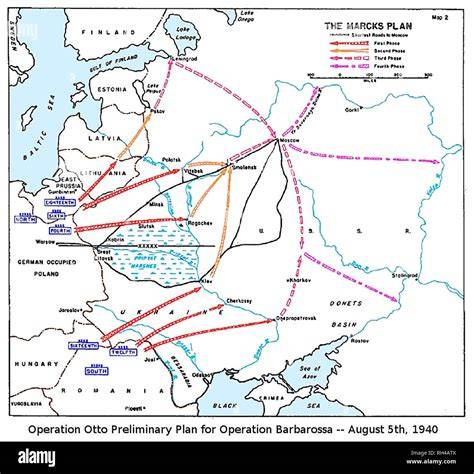
The order of battle for Operation Barbarossa comprised three main German Army Groups: Army Group Center, Army Group North, and Army Group South. Army Group Center, led by Field Marshal Fedor von Bock, sought to capture Moscow and was the most formidable of the three, consisting of several panzer and infantry divisions. Army Group North, under Field Marshal Wilhelm von Leeb, aimed at Leningrad, while Army Group South, commanded by Field Marshal Gerd von Rundstedt, focused on the Ukraine. Each group included various corps and divisions, such as the 3rd Panzer Group and 4th Army. On the Soviet side, the Red Army faced the invasion with a combination of strengths and weaknesses. Commanded by leaders like Marshal Semyon Timoshenko and General Georgy Zhukov, the Soviet forces were initially unprepared and suffered heavy losses. However, they possessed numerous divisions and gradually adapted their strategies as the conflict progressed.
What were the strategic goals of the German and Soviet forces?
The German forces had clear strategic goals in Operation Barbarossa: to conquer the Soviet Union swiftly, eliminate its military capabilities, and secure its vast resources. Hitler believed that a rapid victory would prevent a prolonged war on the Eastern Front. The Germans aimed to capture key cities such as Moscow, Leningrad, and Stalingrad, which were seen as pivotal for their overall war strategy. In contrast, the Soviet Union focused on defending its territory and preserving its resources. The Soviets sought to mobilize their vast manpower to halt the German advance and eventually push back. Their strategy evolved as they learned from initial setbacks, emphasizing counteroffensive operations and leveraging their industrial capacity for war production.
How did the terrain and weather affect the battle plans?
Terrain and weather significantly influenced the battle plans during Operation Barbarossa. The vast expanses of the Eastern Front presented both challenges and opportunities for maneuvering large armies. The flat plains of Ukraine favored the German blitzkrieg tactics, allowing for rapid armored advances. However, the dense forests of Belarus and the swamps of the Baltic states complicated movement and logistics. Initially, the invasion in June 1941 benefited from favorable weather conditions, but as autumn approached, the notorious Russian mud season, or 'rasputitsa,' turned roads into quagmires, severely complicating supply lines and troop movements. The harsh winter that followed further tested both sides, as German forces were not adequately prepared for the extreme cold, while the Soviets began to organize more effectively despite the conditions.
What were the major battles and turning points during Operation Barbarossa?
Several major battles and turning points defined Operation Barbarossa. The Battle of Kiev in September 1941 was one of the largest encirclements in history, resulting in significant Soviet losses and a German victory. The capture of Kiev allowed the Germans to advance deeper into Soviet territory. However, the Battle of Moscow in late 1941 marked a turning point. Despite initial successes, the German advance stalled as the Soviets launched a counteroffensive in December, driving the Germans back. The order of battle influenced these engagements; the deployment of panzer divisions and infantry units determined the pace of the offensive and the effectiveness of the Soviet defenses. The resulting Soviet resilience and adaptation to German tactics demonstrated how the order of battle could shift the momentum of the campaign.
What lessons were learned from the order of battle in Operation Barbarossa?
The order of battle in Operation Barbarossa provided valuable lessons for future military operations. A key takeaway was the importance of adaptability; both sides had to respond dynamically to unexpected challenges, such as logistical issues and weather conditions. The Germans initially relied on rapid movement and surprise, but when faced with the vastness of the Soviet territory and the resilience of the Red Army, their plans proved overly ambitious. For the Soviets, the ability to regroup and reorganize their forces was crucial for eventual success. The conflict underscored the necessity of understanding terrain and the impact of seasonal changes, emphasizing that thorough preparation and flexibility are vital components of military strategy.
Conclusion
To grasp the complexities of Operation Barbarossa, it is essential to examine the specific military units and commanders involved. Understanding their strategic goals clarifies the rationale behind key decisions. Moreover, recognizing how environmental factors shaped the conflict offers insights that remain relevant to military strategy today. Ultimately, the order of battle is not just a list of units; it reflects the evolving nature of warfare and the interplay of numerous factors that influence outcomes.
Frequently Asked Questions
What were the main German army groups in Operation Barbarossa?
The main German army groups involved in Operation Barbarossa were Army Group Center, Army Group North, and Army Group South. Each group had distinct objectives, with Army Group Center aiming for Moscow, Army Group North targeting Leningrad, and Army Group South focusing on the Ukraine.
How did the Soviet Union initially respond to the German invasion?
Initially, the Soviet Union was caught off guard by the speed and ferocity of the German invasion. They suffered heavy losses in the early weeks due to poor strategic positioning and a lack of preparedness, but they gradually adapted and regrouped to mount counteroffensives.
What role did weather play in Operation Barbarossa?
Weather significantly affected Operation Barbarossa. The initial summer conditions favored German advances, but as autumn brought the mud season, it hampered German logistics and troop movements. The harsh winter then posed additional challenges for both sides, impacting combat effectiveness.
What was the significance of the Battle of Moscow?
The Battle of Moscow was significant because it marked a turning point in the campaign. The Soviet counteroffensive in December 1941 successfully halted the German advance and began pushing them back, demonstrating the resilience of the Red Army and changing the momentum of the war.
What lessons did military strategists learn from Operation Barbarossa?
Military strategists learned the importance of flexibility and adaptability in operations from Operation Barbarossa. The campaign highlighted how environmental factors, logistics, and the ability to reorganize forces are critical to success in warfare.