Eugène Dubois: The Pioneer Who Discovered Java Man
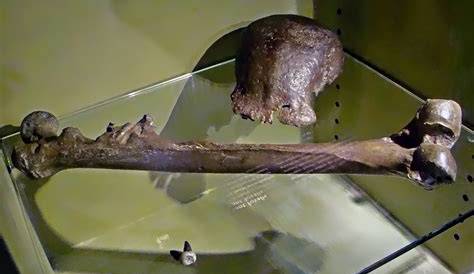
Eugène Dubois is a crucial figure in paleoanthropology, best known for his discovery of Java Man, a fossil that significantly changed our understanding of human evolution. His work laid the groundwork for new perspectives on early human ancestors and their origins. Dubois was a pioneer who explored the complexities of human ancestry, challenging established beliefs and igniting debates that continue to this day.
Who was Eugène Dubois and why is he important?
Eugène Dubois was born in 1851 in the Netherlands and initially pursued a career in medicine. His interest in human origins grew during his studies, particularly after encountering Charles Darwin's theory of evolution. Motivated by the desire to find evidence of early human ancestors, Dubois shifted his focus to paleoanthropology. In 1890, he embarked on an expedition to Java, Indonesia, where he unearthed fossils that would later be called Java Man. This discovery was monumental, as it provided the first concrete evidence of a transitional form between apes and modern humans, making Dubois a vital figure in human evolutionary studies.
What did Dubois discover about Java Man?
In 1891, Dubois discovered a skullcap, a femur, and several teeth near the village of Trinil on the banks of the Solo River in Java. He initially named the species Pithecanthropus erectus, meaning 'upright ape-man.' The fossils exhibited a mix of primitive and modern traits, such as a low forehead and pronounced brow ridge typical of earlier hominids, alongside a more human-like femur indicating bipedalism. This was groundbreaking because it provided clear evidence of an early human ancestor that was neither fully ape nor fully human. Dubois's Java Man became a critical link in understanding human evolution, illustrating the gradual changes that occurred over millions of years.
How did Dubois's findings challenge the scientific community?
Dubois's discovery of Java Man met significant skepticism from the scientific community. Most researchers at the time believed that humans had originated solely in Europe or Africa. Dubois's findings suggested that human evolution could have occurred in Asia, challenging these established theories. His work prompted a reevaluation of existing models of human origins and led to heated debates among anthropologists. Critics often questioned Dubois's methods and labeled his findings as speculative. However, this challenge to accepted norms was necessary; it pushed the boundaries of paleoanthropology and encouraged further research into early human fossils worldwide.
What controversies surrounded Dubois's research?
Throughout his career, Dubois encountered considerable controversy primarily due to the unconventional nature of his findings and their presentation. Critics questioned the authenticity of Java Man, suggesting the fossils might belong to different species or even extinct animals. Some argued that Dubois's interpretation of the fossils was overly ambitious, fearing he was attempting to fit them into a narrative that supported his theories. Moreover, his insistence on the significance of his findings often led to conflicts with established scientists who were reluctant to accept theories diverging from mainstream thought. Despite these challenges, Dubois remained committed to his work, which eventually gained recognition and acceptance decades later.
What is Dubois's legacy in modern science?
Eugène Dubois’s contributions continue to resonate in anthropology and evolutionary biology. His discovery of Java Man opened doors for further exploration of early human fossils in Asia and elsewhere, leading to a more nuanced understanding of human evolution. Today, Dubois is celebrated not only for his findings but also for his role in shifting the scientific paradigm regarding human origins. His work laid the groundwork for subsequent discoveries, including later hominins like Homo erectus and Neanderthals. Modern paleoanthropologists frequently reference Dubois when discussing human ancestry's complexity, underscoring the importance of his legacy in ongoing research.
Conclusion
To grasp the significance of Eugène Dubois, explore his discovery of Java Man and its impact on early theories of human evolution. Focus on how his work paved the way for current studies in anthropology. Understanding the complexity of human origins is a rewarding pursuit, and Dubois's findings provide foundational insights that continue to shape our understanding today.
Frequently Asked Questions
What was Java Man?
Java Man refers to a series of fossils discovered by Eugène Dubois in Java, Indonesia, representing an early human ancestor. These fossils, including a skullcap and femur, provided evidence of a transitional form between apes and modern humans.
What impact did Dubois have on anthropology?
Eugène Dubois significantly impacted anthropology by challenging existing theories of human origins and providing the first concrete evidence of early human ancestors in Asia. His work prompted further research and exploration, expanding the understanding of human evolution.
Why was Dubois's work controversial?
Dubois's work was controversial because it contradicted the prevailing belief that humans originated in Europe or Africa. Many contemporaries criticized his methods and interpretations, leading to debates that questioned the validity of his findings.
How is Dubois viewed today?
Today, Eugène Dubois is recognized as a pioneer in paleoanthropology. His discoveries laid the foundation for modern studies of human evolution, and he is often cited in discussions about early hominins and the complexity of our ancestry.
What did Dubois name the species he discovered?
Dubois initially named the species he discovered Pithecanthropus erectus, meaning 'upright ape-man.' This name reflects the characteristics of the fossils, which showed a blend of primitive and modern traits.