Understanding the Battle of Legnano and Its Impact
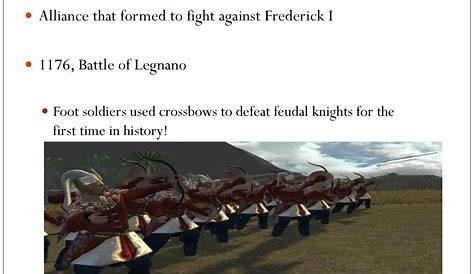
The Battle of Legnano, fought on May 29, 1176, was a crucial event in the struggle between the Holy Roman Empire and the Italian city-states. This battle highlighted the rise of local governance in Italy, particularly through the Lombard League's coalition of city-states. Its significance extends beyond military strategy; it altered the balance of power in Italy and foreshadowed the decline of feudalism.
What happened during the Battle of Legnano?
The Battle of Legnano was marked by the confrontation between the forces of the Lombard League and Emperor Frederick Barbarossa's army near the town of Legnano in northern Italy. The Lombard forces, numbering around 30,000, adopted a defensive formation known as the "carroccio," a war cart that served as a rallying point. The battle began with skirmishes, but as the fighting intensified, the Lombard League outmaneuvered Barbarossa's troops. A pivotal moment occurred when the League's infantry engaged the imperial cavalry, breaking their ranks. Despite Barbarossa's military reputation, his forces were ultimately overwhelmed, resulting in a decisive victory for the Lombard League. This battle showcased the effectiveness of combined tactics and the unity of the Italian city-states against a common enemy.
Who were the key players in the battle?
Key figures in the Battle of Legnano included Frederick Barbarossa, the Holy Roman Emperor, and leaders of the Lombard League such as Alberto da Giussano. Frederick aimed to reassert imperial control over northern Italy, believing that unifying the region was essential for his authority. In contrast, the Lombard League was a coalition of several city-states united to resist imperial domination. Alberto da Giussano emerged as a symbol of resistance, rallying the cities behind a common cause. The motivations of these leaders were deeply intertwined with the political landscape of the time, as the struggle was centered not only on land but also on autonomy and the shifting power dynamics among Italian states.

Why was the Battle of Legnano important?
The Battle of Legnano was significant because it marked a crucial shift toward regional autonomy in Italy. The Lombard League's victory not only thwarted Frederick Barbarossa's attempts to dominate northern Italy but also inspired other city-states to assert their independence. This battle emphasized the weakening of feudal structures, as local governance began to take precedence over imperial control. It demonstrated that the collective strength of the city-states could challenge the Emperor's might, paving the way for future movements toward Italian unification.
What were the long-term effects of the battle?
The long-term effects of the Battle of Legnano significantly reshaped Italy's political landscape. Following the battle, the Lombard League continued to strengthen, culminating in the Peace of Constance in 1183, which granted substantial autonomy to the city-states. This agreement marked a turning point in the relationship between the Emperor and the Italian cities, establishing a precedent for local governance that influenced future Italian politics. The battle also set a template for resistance against centralized power, inspiring later movements for independence and unification across Italy.
What lessons can we learn from the Battle of Legnano?
The Battle of Legnano illustrates the power of unity and local governance. It demonstrates how collective action can effectively challenge larger, centralized authorities. In contemporary governance, the battle highlights the importance of collaboration among various factions to achieve common goals. It also shows that history can inform modern resistance movements, emphasizing that organized coalitions can bring about significant change, especially in the face of overwhelming odds.
Conclusion
To understand the significance of the Battle of Legnano, it is essential to explore the role of local governance in shaping political dynamics. Avoid simplistic narratives that focus only on military tactics and consider the broader implications for Italian society. This battle transformed Italy's political structure and inspired future generations to value autonomy and unity in their struggles.
Frequently Asked Questions
What were the main causes of the Battle of Legnano?
The main causes of the Battle of Legnano stemmed from the ongoing conflict between the Holy Roman Empire and the Italian city-states. Frederick Barbarossa aimed to assert imperial control over northern Italy, while the Lombard League sought to protect their autonomy and resist centralization.
How did the outcome of the Battle of Legnano affect Frederick Barbarossa?
The outcome of the Battle of Legnano was a significant setback for Frederick Barbarossa, forcing him to reconsider his approach to governing the Italian territories. The defeat undermined his authority and highlighted the limits of imperial power in the face of united local opposition.
What was the Lombard League?
The Lombard League was a coalition of northern Italian city-states formed in the 12th century to resist the authority of the Holy Roman Empire. It united various cities, including Milan, Pavia, and Verona, to challenge imperial dominance and protect their local interests.
Did the Battle of Legnano lead to any treaties?
Yes, the battle ultimately contributed to the Peace of Constance in 1183, which recognized the autonomy of the Lombard cities and marked a significant shift in the relationship between the Emperor and the Italian states.
What is the legacy of the Battle of Legnano today?
The legacy of the Battle of Legnano endures in Italian history as a symbol of resistance and the fight for autonomy. It is often referenced in discussions about regional identity and the importance of local governance in the face of centralized authority.