Understanding the Angolan War of Independence and Its Impact
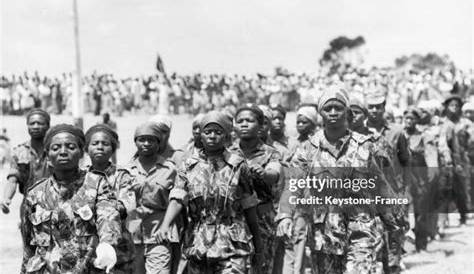
The Angolan War of Independence, spanning from 1961 to 1975, was a pivotal conflict in Angola's fight against Portuguese colonial rule. It was driven by deep-rooted historical injustices and fueled by various nationalist movements seeking autonomy. Understanding the causes, key events, and international influences of this war provides valuable insight into its significance within the broader context of African liberation movements.
What sparked the Angolan War of Independence?
The Angolan War of Independence was ignited by long-standing frustrations against Portuguese colonial rule, which began in the late 15th century. The Portuguese established a harsh regime that exploited Angola's resources and oppressed its people, fostering deep resentment. By the mid-20th century, many Angolans were inspired by global decolonization movements and began mobilizing for independence. Factors such as rising nationalist sentiments, economic exploitation, and the influence of other African liberation movements played crucial roles in sparking the uprising. The immediate trigger was a series of coordinated attacks by nationalist groups on Portuguese military installations in 1961, marking the start of a protracted struggle for freedom. This conflict was not solely about independence; it also aimed to address social inequalities and injustices that had persisted under colonial rule.
Who were the main players in the conflict?
The Angolan War of Independence featured several key players, primarily nationalist movements with differing ideologies. The most prominent groups were the MPLA (People's Movement for the Liberation of Angola), UNITA (National Union for the Total Independence of Angola), and FNLA (National Front for the Liberation of Angola). The MPLA, with a Marxist orientation, sought to establish a socialist state, while UNITA adopted a more conservative, anti-communist stance. FNLA, initially the most recognized group, aimed for a traditional nationalist approach but struggled to maintain influence. These internal divisions complicated the struggle, as each faction not only sought independence from Portugal but also aimed for control over the post-independence government. Contrary to the belief that these groups were unified in their goals, their rivalries often hampered the broader independence movement, leading to fragmentation and conflict among themselves.
How did the war unfold over the years?
The war unfolded in phases, marked by significant battles and shifting power dynamics. After the initial attacks in 1961, the conflict escalated as nationalist groups gained support both locally and internationally. Major battles, such as the Battle of Kifangondo in 1975, showcased the intensity of the fighting. The MPLA gradually gained the upper hand, particularly with assistance from Cuba and the Soviet Union, while UNITA received backing from the United States and South Africa. This foreign involvement intensified the conflict, transforming it into a proxy war during the Cold War. The fighting resulted in widespread suffering among the civilian population, with many displaced and communities destroyed. The war was not merely a series of military engagements; it was a struggle for the hearts and minds of the Angolan people, with each faction attempting to establish legitimacy and support among the populace.
What was the international response to the war?
The international response to the Angolan War of Independence was significantly shaped by Cold War dynamics. The MPLA received substantial support from the Soviet Union and Cuba, both of whom viewed the movement as a means to expand their influence in Africa. This support included military aid, training, and even troops on the ground to bolster MPLA forces. Conversely, UNITA garnered support from the United States and South Africa, who sought to counter the spread of communism in the region. This foreign involvement complicated the conflict, as local dynamics were often overshadowed by international interests. Many view the war as purely a local struggle, but it was deeply intertwined with global politics, illustrating how international interests can shape conflicts in ways that may not align with the desires of the local population.
What were the lasting effects of the war on Angola?
The Angolan War of Independence profoundly impacted the country, shaping its post-war society and political landscape. After gaining independence in 1975, the MPLA established a one-party state, which led to further internal conflict with UNITA that persisted until the late 1990s. The war resulted in significant loss of life, destruction of infrastructure, and deep social divisions that endured long after the fighting ceased. Angola's economy, heavily reliant on oil, became a focal point for corruption and inequality, with many citizens still grappling with the effects of war and poverty. The legacy of the war is complex; while it led to independence, it also created ongoing challenges that Angola faces today, including political instability and social unrest. The consequences of the conflict are still felt in contemporary Angolan society.
Conclusion
To deepen your understanding of the Angolan War of Independence, consider exploring the ideological differences among the nationalist movements and how these shaped the conflict. Pay attention to the critical role of foreign powers, as their involvement significantly influenced both the course of the war and its aftermath. While it may be tempting to focus solely on the independence achieved, it's essential to recognize the ongoing challenges Angola faces as a direct result of this tumultuous period. A comprehensive analysis will provide a nuanced understanding of how historical struggles continue to affect present-day Angola, enriching your perspective on African liberation movements.
Frequently Asked Questions
What were the main causes of the Angolan War of Independence?
The primary causes included long-standing resentment against Portuguese colonial rule, economic exploitation, and the rise of nationalist sentiments influenced by other African liberation movements. These factors culminated in a coordinated uprising in 1961.
Which groups fought in the Angolan War of Independence?
The main groups involved were the MPLA, UNITA, and FNLA, each with distinct ideologies and goals. The MPLA aimed for a socialist state, UNITA was conservative and anti-communist, and FNLA pursued a traditional nationalist approach.
How did foreign powers influence the Angolan War?
Foreign powers had a significant impact on the war, with the MPLA receiving support from the Soviet Union and Cuba, while UNITA was backed by the United States and South Africa. This involvement transformed the conflict into a proxy war during the Cold War.
What were the effects of the war on Angola's society?
The war caused substantial loss of life, destruction of infrastructure, and deep social divisions. It also led to the establishment of a one-party state and ongoing political instability, along with economic challenges that persist today.
When did Angola gain independence?
Angola gained independence from Portugal on November 11, 1975, following a lengthy struggle that began with the war in 1961.